Our Aim

The aim of our curriculum is to equip children with the skills and knowledge they need to explore and understand the world around them. We believe that children grow and develop when they have access to a well-thought-out learning environment and engaged adults.


The teaching and learning of new skills and knowledge are delivered through both adult and child-led opportunities, both indoors and outdoors. We focus on the importance of knowledge and skills that will support children in every way possible so that they can make the most of opportunities and fulfil their potential, along with promoting their independence.

Prime Areas of Learning

  • Personal, Social, & Emotional development
  • Communication & Language development
  • Physical development

Specific Areas of Learning

  • Literacy
  • Mathematics
  • Understanding the world
  • Expressive arts and design

3 Characteristics of Effective Learning

  • Playing and exploring
  • Active learning
  • Creating and thinking critically
Using an array of teaching and learning styles

Our intent is for children to leave us feeling confident in…

1

Knowing about themselves / others, and how to keep safe

PSED/CL/PD/UW
2

Having the social skills and confidence to play alongside / with other children

PSED/CL/UW
3

Being able to make a simple choice

CL
4

Trying something new, and being able to persevere

PSED/PD/L/M
5

Listening to others, and sharing with them

CL/PSED/M
6

Following simple instructions

CL
7

Knowing several songs and rhymes, being able to sing along - and enjoy them

L/M/EAD/CL/PSED
8

Sitting at a table for snack and meal times

PSED/UW/PD
9

Talking to an adult

CL/PSED/UW
10

Using gross and fine motor skills to do things independently

PD
11

Using mathematical concepts and language in play and everyday experiences

M
Implementation – How we’ll support them

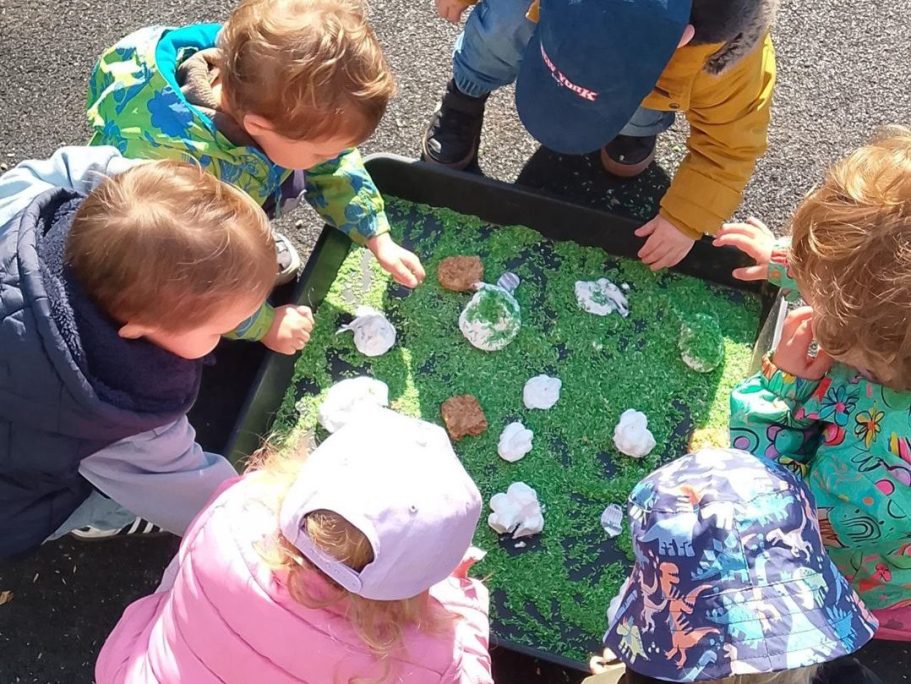
  • Observe children at play and plan activities that follow their interests and introduce them to new ideas and concepts.
  • Being specific with our praise, noting how well children solve problems, have ideas, and negotiate.
  • Use additional funding to support children as identified.
  • Work with parents to ensure they can support their child’s learning at home.
  • Share and discuss experiences.
  • Role model positive language and behaviour.
  • Provide supervised opportunities for turn taking.
  • Provide real life experiences.
  • Use flashcards to support basic English language/for children to express their own wants and needs.
  • Well planned learning environments indoors and outdoors that promote the focus on learning.
  • Know and understand the areas of learning and development.
  • By building a good relationship with both key children and their immediate family.
  • Know how each play and learn.

We’ll be offering a range of experiences to support knowledge and development…

  • Planting seeds, watching them grow and eating what has been grown
  • Meeting people from the local community who help us, such as the dentist and the police
  • Trips to local parks and walks around the local area
  • Raising money for charities
  • Baking activities

We’ll celebrate a range of festivals and share occasions with the children

  • Shared meals and food tasting
  • Dressing up
  • Dancing to music
  • Books and stories
  • Visitors
  • Making cards

Assessment

Most of the assessments we do at nursery are formative, so that it quickly helps us to make a difference to children’s learning. However, we also need to have an overview of children’s progress, so that we can take further actions where needed. We notice what children can and can’t do. We are good at deciding when it will be helpful to step in and support, and when it’s best to be encouraging but hang back. It is important that we are certain that children are secure in what they know and can do, before introducing them to something new.


We complete:

  • A baseline assessment of the child’s development shortly after they start with us. This is completed in partnership with parents
  • Termly summative assessment of where the child’s development is in relation to typical milestones and the characteristics of effective learning
  • Leavers
  • Summative assessment of where the child’s development is in relation to typical milestones, the characteristics of effective learning, child’s interests, and any other relevant comments about the child’s time with us

Assessment helps with:

  • The early identification of children who need temporary extra help, and children who may have special educational needs
  • Checking that individual children, and groups of children, are making progress and taking prompt action where this in not the case
  • Reporting formally and involving parents in the statutory 2-year-old progress check
  • Celebrate children’s achievements with parents and share focus for learning
  • Discussions with other professionals who may be involved with a child and family, for example, a health visitor or social care worker
  • Sharing information with receiving schools in the summer so that children can continue their learning journey through the EYFS as seamlessly as possible

Evaluation

We will check that our curriculum is meeting the needs of our children by:

  • Gathering feedback from the children, parents, and other professionals
  • Review the progress children are making and how they are accessing the learning environment
  • Discuss as a team our observations of the educational programmes we offer
  • Individually, with the manager of the setting, discuss the curriculum

Other Pages under Explore the Nursery